Move better.
Build strength.
Keep going.
Simple workout guides, feel-good mobility, and recovery basics. A little more intention in every session.

Train with intention
Start simple. Build a repeatable routine.
Make room to move
Give everyday movement a little attention.
Respect the reset
Rest is part of showing up again.
A good place to start.
Less guesswork, more useful basics.
Pick a guide and take the next small step.
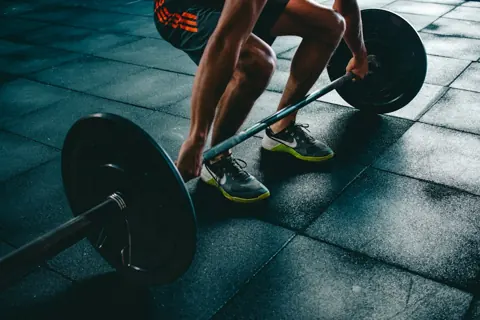 Workout guide
Build your full-body foundation
Five familiar movement patterns. One manageable place to start.
6 min read · Beginner friendly
 Mobility guide
Make space for everyday movement
Comfortable movement for the moments between your sessions.
4 min read · No equipment
 Recovery guide
Get back to the recovery basics
Rest, food, hydration, sleep. Give the essentials your attention.
5 min read · Everyday habits
Meet yourself
where you are.
Choose a sample session that fits your equipment and energy. Start lighter, move with control, and rest when you need to.
Read the strength fundamentals ↗Move Well sample routine
- 018–10 repsChair sit-to-standUse a sturdy chair; stand and sit with control.
- 028–10 repsWall push-upKeep your body in one line; bend your elbows gently.
- 038–10 repsGlute bridgeLie on your back; lift hips without arching.
- 0410–12 repsStanding calf raiseUse a wall for balance; rise and lower slowly.
- 056 each sideBird dogFrom hands and knees, reach opposite arm and leg.
Begin with 5 minutes of easy movement. Take breaks between exercises as needed.
Small habits. More balance.
Your session is one part of the picture.
Make space for movement and rest, too.
Take a movement break.
A gentle, six-minute sequence for a little movement between the busy parts of your day.
Ready when you are. Keep every movement comfortable.
Explore the mobility guide ↗Give the basics their due.
No elaborate protocol. Just a few everyday habits to pay attention to after your session.
Checklist saved on this device only.
Understand the
building blocks.
Amino acids, peptides, proteins. A simple introduction to the words behind basic biology.
Learn the basicsACIDAMINO
ACIDAMINO
ACIDAMINO
ACID
A simple chain. A starting point for understanding.
A few useful
answers.
Do I need a gym to get started?
No. The bodyweight sample uses a sturdy chair, a wall, and a little floor space. Start with the version you can perform comfortably. For technique and progression, read our strength guide.
How often should I train?
The CDC recommends muscle-strengthening activity on at least two days per week for adults, alongside aerobic activity. How you build toward that depends on your starting point and circumstances. Read the CDC guidance.
Is mobility the same as stretching?
They overlap. Stretching focuses on flexibility; mobility is a broader term for moving through a range with control. Our mobility guide keeps the focus on gentle, comfortable movement.
What if a movement hurts?
Stop that exercise. These guides are not rehabilitation plans. Seek qualified guidance for ongoing pain, injury, or a medical condition before using a routine.
Do you recommend peptides or supplements?
No. The biology article explains terminology. It does not recommend peptide products, injections, supplements, or treatment protocols.
Start small. Make it yours.
A routine you can return to is a useful place to begin.